Industry Insights
How to Become a Traffic Controller in Victoria: The Complete 2026 Guide


Quick answer: To become a traffic controller in Victoria, you need:
- a White Card
- the combined TC1/TMI1 course from an Austroads Approved Training Provider
- at least 20 hours of supervised on-site work, followed by a final practical assessment
Once you pass, you receive a Temporary Traffic Management (TTM) Card. Most people can be job-ready within a few weeks.
Traffic controllers keep workers, drivers and pedestrians safe around roadworks, construction sites, utility works and events. It's one of the fastest ways into construction and civil work. You don't need a trade background, and there's steady demand in Melbourne, Geelong and across regional Victoria.
Victoria's training rules changed when the state moved to the national framework, so many guides online are now out of date. This one covers the current process step by step.
What Does a Traffic Controller Do?
A traffic controller (TC) manages how vehicles, cyclists and pedestrians move through or around a worksite. A typical shift can include:
- Directing traffic with a stop/slow bat
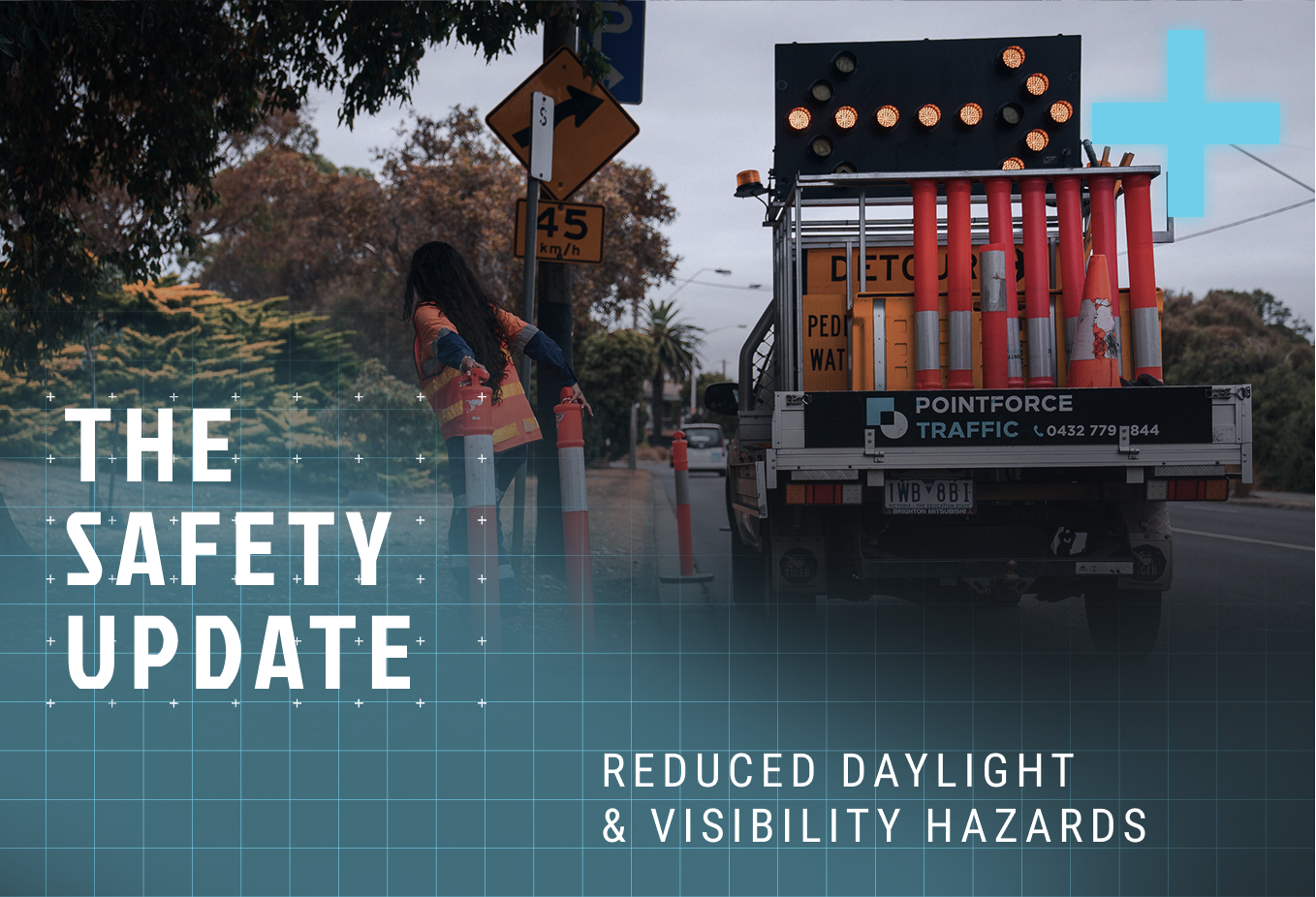
- Setting up, adjusting and packing up signs, cones and barriers
- Following the site's Traffic Management Plan (TMP)
- Keeping in radio contact with other controllers and the site supervisor
- Watching for hazards, impatient drivers and changing conditions
- Stopping traffic safely so trucks and machinery can enter and exit the site
Traffic Controller vs Implementer vs Designer
Under the national framework there are three practitioner roles. Knowing the difference helps you plan your career:
- Traffic Controller (TC): controls traffic on site using a stop/slow bat.
- Traffic Management Implementer (TMI): sets up, monitors, changes and removes the traffic management layout shown in the TMP.
- Traffic Management Designer (TMD): designs the traffic management plans themselves.
Most new starters train as a TC and TMI together, because crews need people who can do both.
Where Do Traffic Controllers Work in Victoria?
Traffic controllers are needed wherever work affects a road or footpath, including:
- Road construction and maintenance
- Commercial and residential building sites
- Civil and infrastructure projects
- Utility works such as water, gas, power and telecommunications
- Council works
- Major events, sporting fixtures and festivals
The work isn't limited to Melbourne. Regional centres such as Geelong, Ballarat and Bendigo also have ongoing road and infrastructure work.
Victoria's Training System: What Changed
Victoria now follows the Austroads National Training Framework for Temporary Traffic Management. The older approach centred on a single traffic control ticket. The new framework sets out a clearer pathway based on the type of road you work on:
- Category 1: urban streets and low volume rural roads
- Category 2: high volume roads
- Category 3: motorways and freeways (implementer and designer roles only)
The biggest change for new starters is the on-site practical. You now need real supervised experience on a worksite before you're fully qualified, not just a day in the classroom.
Step-by-Step: How to Become a Traffic Controller in Victoria
Step 1: Get Your White Card
You'll need a White Card (CPCWHS1001 Prepare to Work Safely in the Construction Industry) before you can enrol in traffic control training in Victoria. It's a one-day course covering general construction safety. You'll need photo ID to enrol. Find out more on WorkSafe Victoria's construction induction page.
Step 2: Choose an Approved Training Provider
If you're looking for a traffic controller course in Melbourne or regional Victoria, only Austroads Approved Training Providers can deliver it. Before you book:
- Check the provider is listed on the Austroads website
- Ask what the course price includes (card registration, the final practical assessment, resits)
- Ask whether they can help you arrange your on-site practical hours
- Compare course dates, as some providers book out weeks ahead
Step 3: Complete the TC1/TMI1 Course
Most new starters do the combined TC1/TMI1 course for Category 1 roads. It's made up of two skill sets:
TC1 (RIISS00058) Traffic Controller, Urban Streets and Low Volume Rural Roads
- RIICOM201E Communicate in the workplace
- RIIWHS205E Control traffic with stop-slow bat
- RIIWHS206 Control traffic with portable traffic control devices and temporary traffic signs
TMI1 (RIISS00060) Traffic Management Implementer, Urban Streets and Low Volume Rural Roads
- RIICOM201E Communicate in the workplace
- RIIRIS301E Apply risk management processes
- RIIWHS302E Implement traffic management plans
- RIIWHS303 Implement traffic management
The classroom and simulated assessment usually take about three days.
Step 4: Complete Your On-Site Practical
After the classroom component, you need supervised experience on a real worksite. This means at least 20 hours on Category 1 roads, working with a stop/slow bat and setting up and packing up traffic management schemes. You then complete a final practical assessment.
Important: your practical has to be finished within six months of passing the theory. If you leave it too long, you may need to redo the course. Line up your on-site hours before you finish the classroom component.
Step 5: Receive Your TTM Card
Once you pass everything, you'll receive your Statement of Attainment and a Temporary Traffic Management (TTM) Card. You can then work as a traffic controller and implementer on Category 1 roads in Victoria. Carry your card on site, because supervisors and authorities can ask to see it.
Step 6: Find Your First Role
Many new traffic controllers find their first shifts through a labour hire company. That gives you access to a range of sites and clients and helps you build experience fast. See our tips on choosing a labour hire company below.
How Long Does It Take?
- White Card: 1 day
- TC1/TMI1 classroom and simulated assessment: about 3 days
- Supervised on-site practical: at least 20 hours of work
- Final practical assessment: 1 day
- Total: usually a few weeks
How fast you finish mostly depends on how quickly you can get your on-site hours.
How Much Does It Cost?
Each training provider sets its own fees. As a rough guide:
- White Card: from around $140
- TC1/TMI1 course plus final practical assessment: around $1,100 to $1,200 in total
Be careful with very cheap course prices you might see online. Some older articles quote prices from the old single-ticket system, which is no longer the full pathway in Victoria.
Gear and PPE You'll Need
Most sites expect you to arrive with your own basic PPE. Check with your employer, because some supply part of your kit. The usual list is:
- Hi-vis clothing: day/night rated shirt, jacket and pants that meet Australian Standards
- Steel cap safety boots
- Hard hat where the site requires one
- Safety glasses: tinted for day work, clear for night works
- Wet weather gear: hi-vis rain jacket and pants
- Sun protection: sunscreen, a brim or legionnaire attachment for your hard hat where allowed, and plenty of water
- Warm layers for winter and night shifts
On site, you'll typically use:
- Stop/slow bats
- Two-way radios
- Signs and sign stands
- Cones, bollards and barriers
- Portable traffic control devices on some jobs
What Do Traffic Controllers Get Paid?
Pay varies, so be wary of a single 'average' figure. Your rate depends on:
- The award or enterprise agreement covering the job
- When you work: night, weekend and public holiday shifts usually attract penalty rates
- Your qualifications: TC2/TMI2 and higher open up higher-value work
- Your experience and reliability: dependable controllers get more regular hours
- Travel: some regional or remote work includes travel allowances
When you're offered work, ask for your hourly rate, penalty rates and minimum shift length in writing.
Do You Need a Driver's Licence?
A driver's licence isn't a formal requirement for the qualification, but it's highly recommended. Sites change often, start times are early, and public transport rarely suits a 5am start on a regional road job. Having your own car opens up many more shifts.
How to Choose a Labour Hire Company
In Victoria, labour hire providers must hold a licence. Point Force Group Pty Ltd is a licensed provider (Victorian labour hire licence: VICHL01830). Before you sign up anywhere:
- Check the company on the Labour Hire Authority's public register
- Ask what sites and types of work they supply traffic controllers to
- Ask how shifts are offered and how much notice you'll get
- Ask whether they can help new starters with on-site practical hours
- Make sure your pay rate and conditions are clear before your first shift
Common Mistakes to Avoid
- Booking a course with an unapproved provider. Only Austroads Approved Training Providers can deliver the national courses.
- Leaving your practical too late. You only have six months after the theory.
- Relying on old online guides. Many still describe the old one-day ticket.
- Letting your card expire. Put your renewal date in your calendar.
- Turning up without the right PPE. It's the quickest way to lose a shift.
How Long Is a Traffic Control Ticket Valid?
A TTM Card is generally valid for three years from the date of issue. Check the expiry date on your card and complete refresher training before it runs out to keep working.
Where Can Traffic Control Take You?
Traffic control is a strong first step. With experience and further training, you can move into:
- TC2/TMI2: high volume roads
- TMI3: motorways and freeways
- Traffic Management Designer (TMD): designing traffic management plans
- Supervisor and team leader roles
- Other roles in civil construction
Already Qualified Interstate?
Victoria recognises some interstate and older traffic qualifications while it moves to the national framework. You may still need localised training with an Approved Training Provider. Recognition for older and interstate TC and TMI tickets ends on 1 March 2027, or earlier if your card expires or is more than three years old. Check the Department of Transport and Planning website before you start work in Victoria.
Find Traffic Control Work with Point Force Group
Point Force Group supplies qualified traffic controllers to construction, civil and infrastructure projects across Melbourne and regional Victoria through our Traffic division. Whether you've got your tickets or you're working towards them, we'd love to hear from you.
Looking for work near you? See our Traffic Management Melbourne page.
Explore traffic controller jobs in Victoria with Point Force Group
Frequently Asked Questions
Can I become a traffic controller with no experience?
Yes. You don't need any construction experience. You'll need a White Card and the TC1/TMI1 course, including the on-site practical.
What's the difference between TC1 and TMI1?
TC1 qualifies you to control traffic with a stop/slow bat. TMI1 qualifies you to set up, monitor and remove traffic management on site. Most people do both together.
Can I do the traffic controller course online?
Some theory may be offered online, but the national framework includes practical assessment and supervised on-site hours. You can't complete the whole qualification online.
Is the old RIIWHS205 ticket still valid in Victoria?
Victoria has moved to the national framework. If you hold an older or interstate ticket, check the current recognition rules with the Department of Transport and Planning. Recognition for TC and TMI tickets ends on 1 March 2027, or earlier if your card expires first.
How long does a TTM Card last?
Generally three years from the date of issue. Check the expiry date on your card and complete refresher training to renew it.
Do I need TC2 to work on main roads?
Yes. Category 2 covers high volume roads, so you'll need TC2/TMI2 for that work. Most people start at Category 1 and upgrade once they have experience.
Can I work in Queensland with a Victorian card?
Each state sets its own rules, so check with the relevant state authority before working interstate.
Is traffic control a good job?
For many people, yes. Training is quick, there's demand across Victoria, shifts are varied, and there's a clear path to higher qualifications and supervisor roles.
Further Reading
- Austroads: Temporary Traffic Management Categories and the National Training Framework
- Austroads: Find an Approved Training Provider
- Department of Transport and Planning: Temporary Traffic Management Training
- Labour Hire Authority Victoria: Licence Check
- WorkSafe Victoria: Construction Induction (White Card)
Other news & insights
Stay informed with the latest industry news, expert insights, and project updates from Point Force Group.